It is impossible not to communicate.
Paraphrasing the American psychologist Paul Watzlawick, every word, every gesture, and every silence acquires the power of a message. The rapid and constant change imposed by the challenges of the digital revolution renews the debate on the importance of acquiring proper communication skills, which are more necessary today than ever.
The theme of the year proposed by the Istituto Don Carlo San Martino, namely: Let’s prick up our ears, aims to “train” students to master the knowledge essential for establishing a deep relationship with the world, using as a guideline the eight key competences identified by the European Union for a sustainable lifestyle within a lifelong learning perspective.
The theme is developed across every school level, following teaching methodologies designed to promote the development of linguistic-communicative and relational skills.
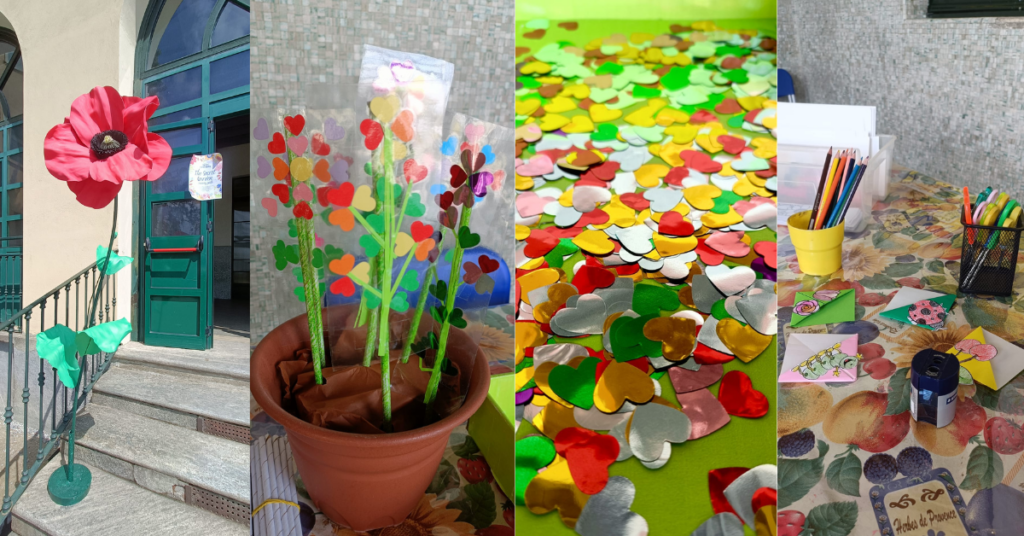
For children attending the Spring and Nursery section, “pricking up our ears” means paying particular attention to change, to all the transformations observed in daily life and in ourselves.
The common thread of the educational project is “The Very Hungry Caterpillar” by Eric Carle, the book that tells the story of a charming, gluttonous caterpillar. The storytelling and dramatization of the story allow for the organization of various activities touching upon different fields of experience, focusing attention and observation on the transformations that will occur. Because change can sometimes be a little scary… But with a pinch of encouragement and a lot of love, novelty becomes an exciting challenge!
Primary school students are the protagonists of educational play workshops designed to guide them into “relating” through sight and touch, without using words. By putting playful and fun activities into practice, students learn to decode increasingly complex messages and develop awareness of their actions, why they perform them, and how to carry them out responsibly, with full respect for others. They learn that gestures significantly impact the transmission of the message. They learn to “listen,” to themselves and to others, to establish an empathetic connection. In this direction, reflection on the value of inclusion plays a role of primary importance, as highlighted by the workshop offered to fourth-grade primary classes focusing on LIS, the Italian Sign Language. Through the use of signs, students develop creativity, imagination, fantasy, and visual memory, and have the opportunity to express their moods immediately, learning to reflect on their emotions. And to respect them.
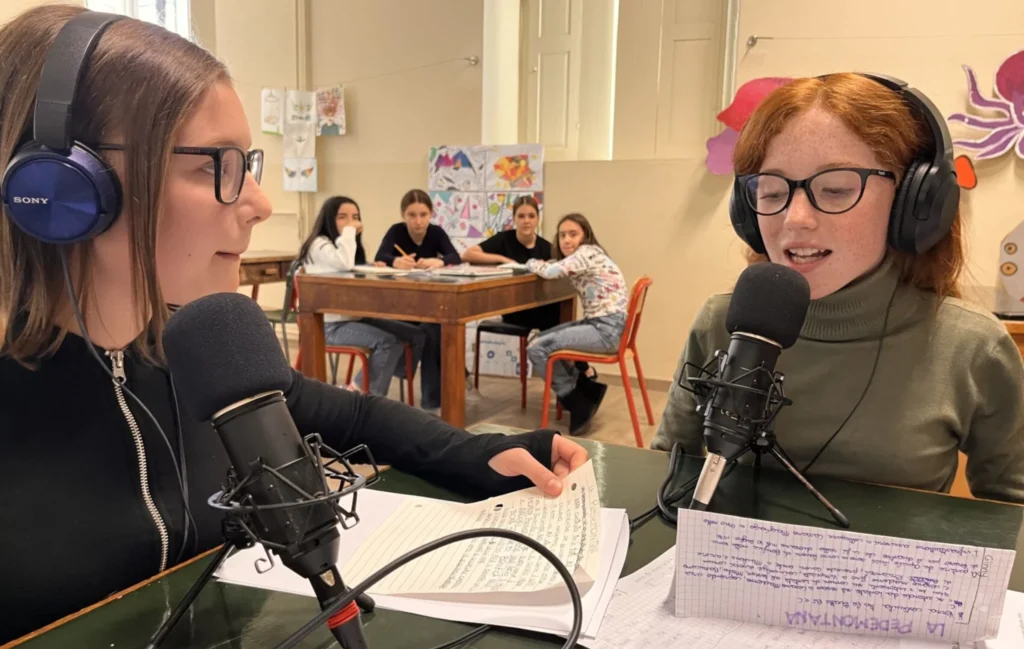
The lower secondary school enters the heart of the theme with the Podcast project Let’s prick up our ears (which involves all three school levels), designed with the aim of promoting interdisciplinary skills, digital education, online safety, soft skills, and cooperative learning. Under the guidance of teachers, the students “transform” into a real editorial team, a close-knit group of authors (complete with production directors, editors, sound and image experts), dividing tasks and responsibilities in selecting news, writing texts, and developing the editorial plan most in line with the characteristics of the identified audience.
Furthermore, they participate in editing activities, enhancing strategic content. They become the protagonists of the narrative, creating a true “script for the voice” enhanced by expressive reading, the first and fundamental element of connection between the messenger and the target audience. In short, they have the opportunity to strengthen their communication skills and establish effective relationships with the entire work group, which becomes a safe space for discussion. A space where they learn to value the word and use concrete language, rich in anecdotes and emphasized by the right “rhythm” to ensure the story captivates the audience. Because “communicating” means, first and foremost, sharing an experience. A story.
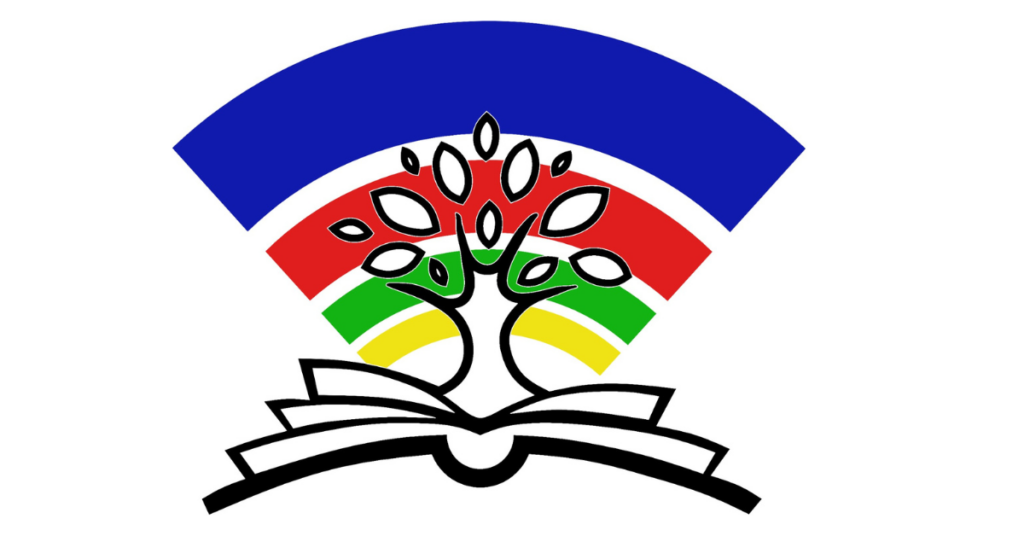
Communicating also means sharing a value. This is why the logo designed for the theme of the year has a strong link to our school’s original logo: a tree whose roots emerge from a book, the ultimate symbol of knowledge. At the center of the concentric arcs, representing Wi-Fi, stands the Rigola tree, considered the origin of the connection to the world.
Each color refers to each school level: spring, nursery, primary, and lower secondary school. All united in the commitment that leads to an awareness: knowing oneself and knowing others is the first step to changing the world.