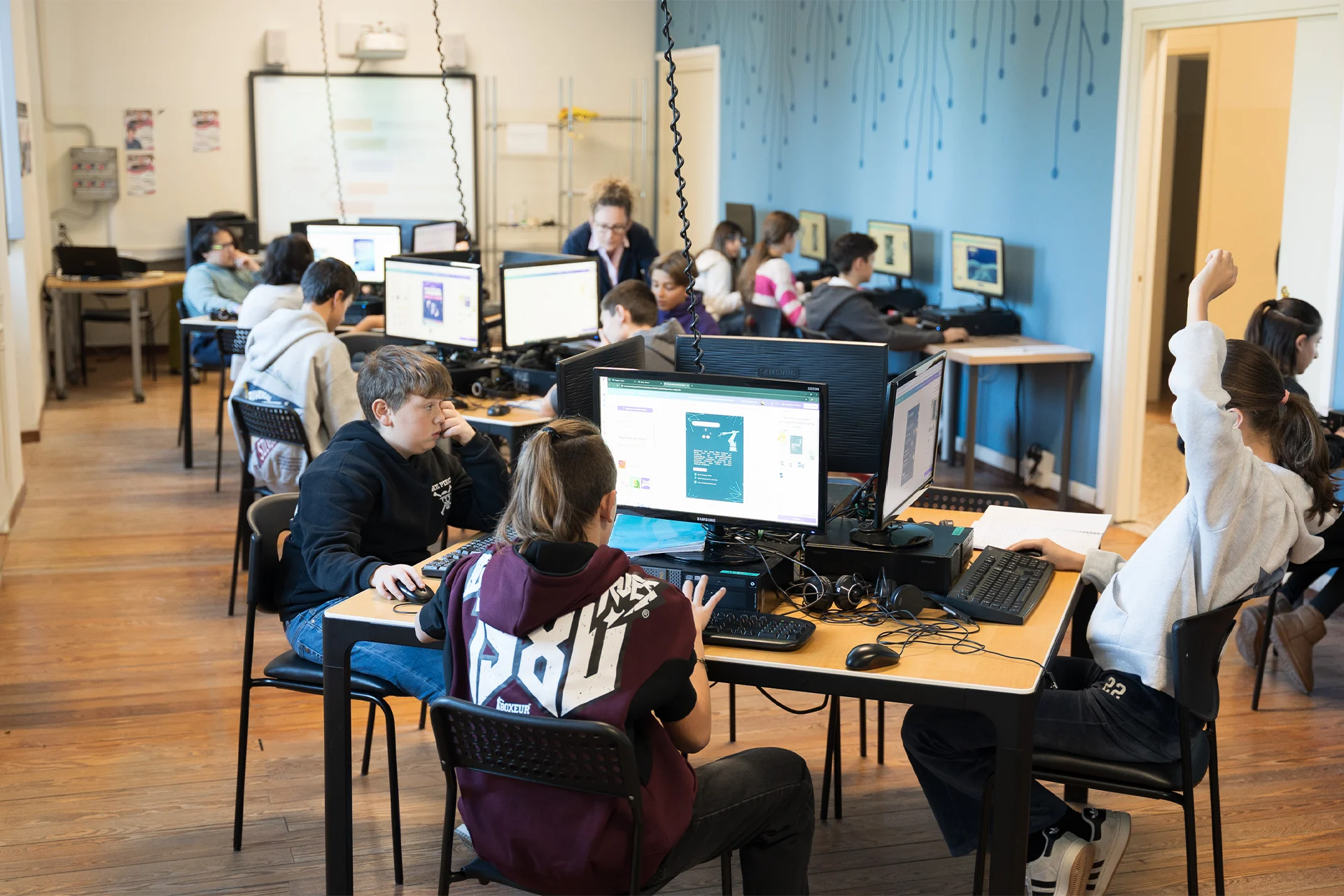
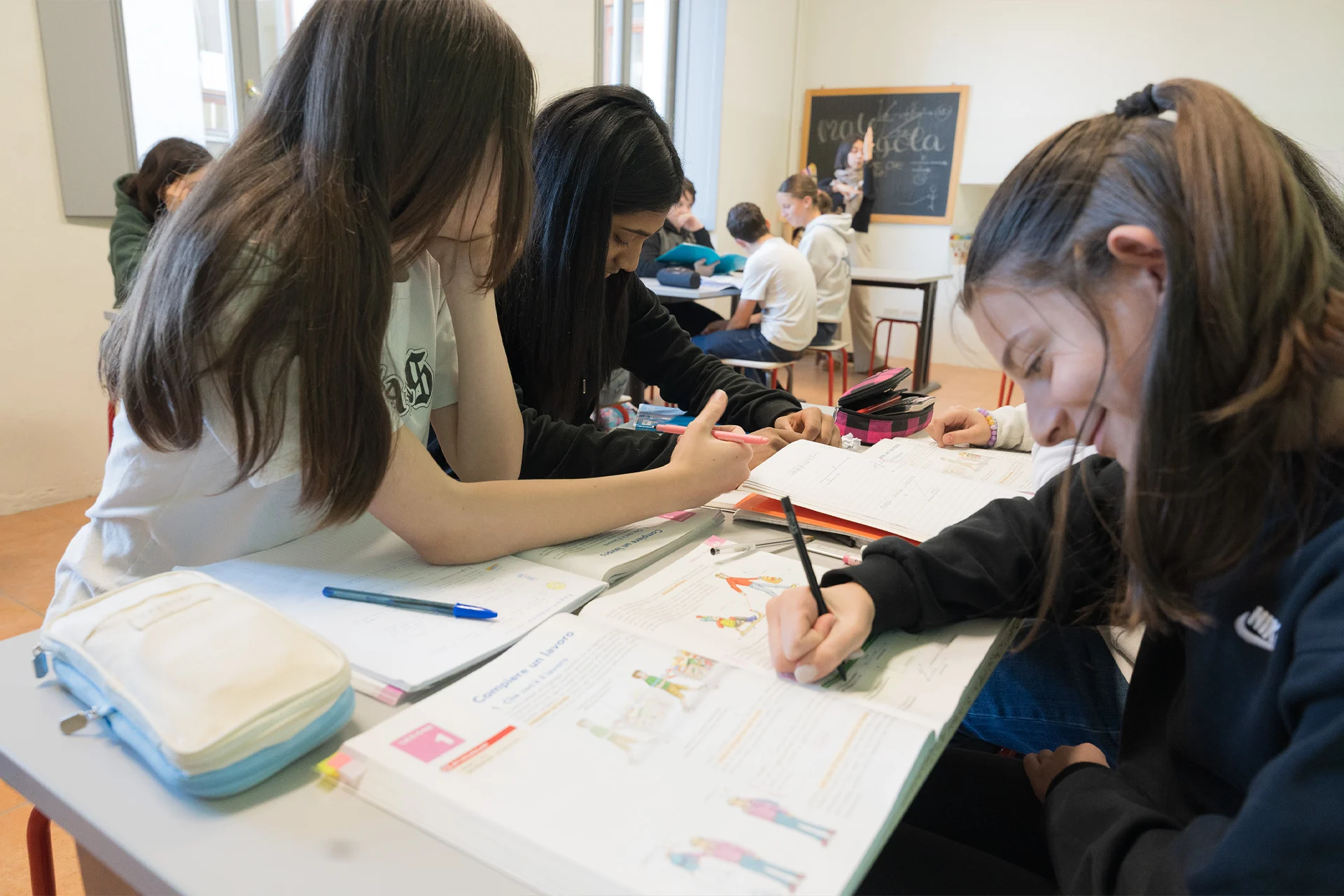
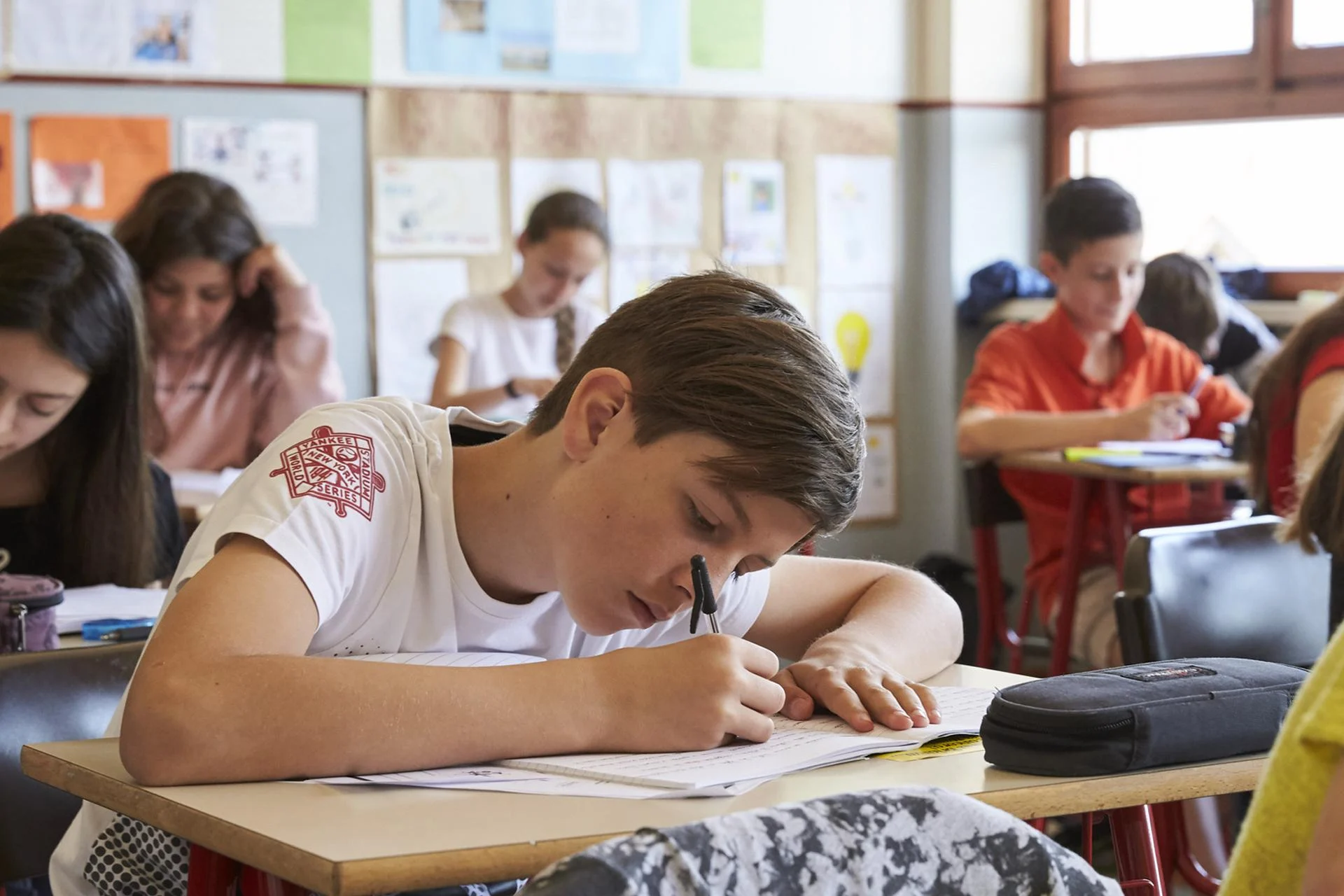
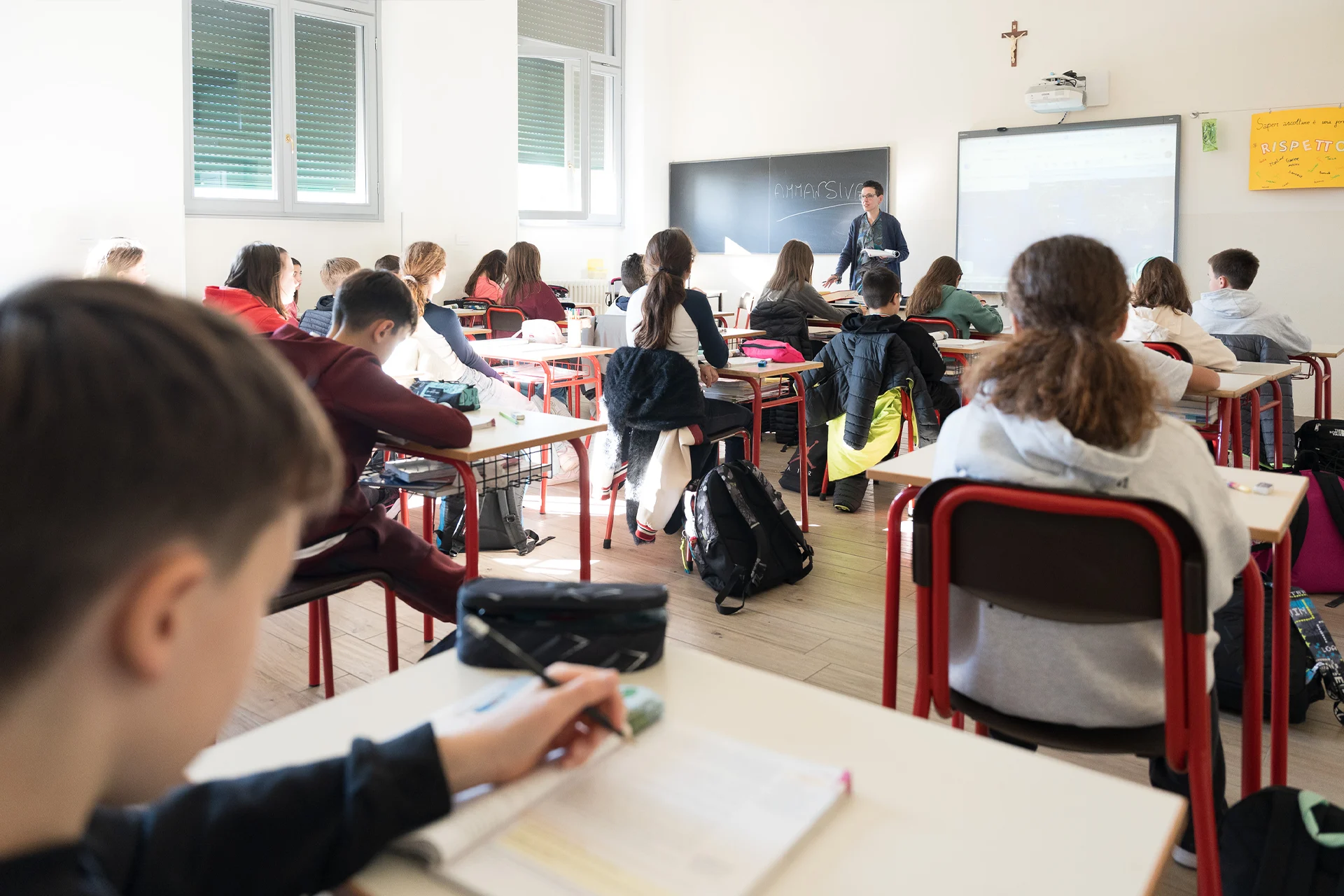
The Institute’s Humanities Area accompanies students in their cultural, linguistic, and civic growth, developing communicative, expressive, and critical skills fundamental to the formation of the person and the citizen. Here, learning also means knowing oneself, interpreting reality, and reflecting on the values of coexistence and mutual respect.
Special attention is reserved for emotional education: from Nursery School onwards, children learn to recognize and express emotions, enriching their emotional vocabulary. Across the different age groups, activities include emotional dialogue, emotion diaries, role play, and strategies that encourage putting oneself in others’ shoes. The teacher guides and mediates the process, fostering a climate of empathy and listening.
Our Workshops
-
Reading Project
Accompanying students of all ages: from picture books in Nursery School to text decoding in Primary School, through to critical reading and source evaluation in Lower Secondary School.
-
Writing Project
In Primary and Secondary school, students experiment with different strategies to express their ideas in written form: writer’s notebooks, creative writing, flash exercises, and participation in competitions or the class newspaper.
-
Theatrical Education
Present in all school levels, it allows students to approach physical and dramatic expression through creative scriptwriting, animated readings, text interpretation, and dressing up.
Cross-curricular Activities and Initiatives
The Humanities Area participates in national and international projects on reading, poetry, theatricality, memory, and gender equality, raising students’ awareness of current affairs.
Linguistic and communicative skills are at the heart of the educational path: from Nursery to Secondary school, workshops, reading and creative writing projects, and interactive experiences stimulate critical thinking, creativity, and active participation.
In Primary school, the book is a key tool for reading, writing, and studying; grammar, syntax, and interactive exercises support learning, while civic education introduces rights, duties, and responsible citizenship.
In Secondary school, Italian lessons and interactive workshops stimulate creative writing and independent reading, while history and geography develop critical thinking through multimedia projects and the flipped classroom methodology. To complete the path, the introduction to Latin and cross-curricular activities such as human rights projects and international celebrations foster socialization and social awareness.